Live action, full AI or hybrid: choosing a campaign production approach
The right production technique depends on what the campaign must show and how it will be approved. Start with the creative requirement, product fidelity and final uses. Then compare live action, full AI and a hybrid approach against the same brief, rather than choosing a technique because it is currently fashionable.
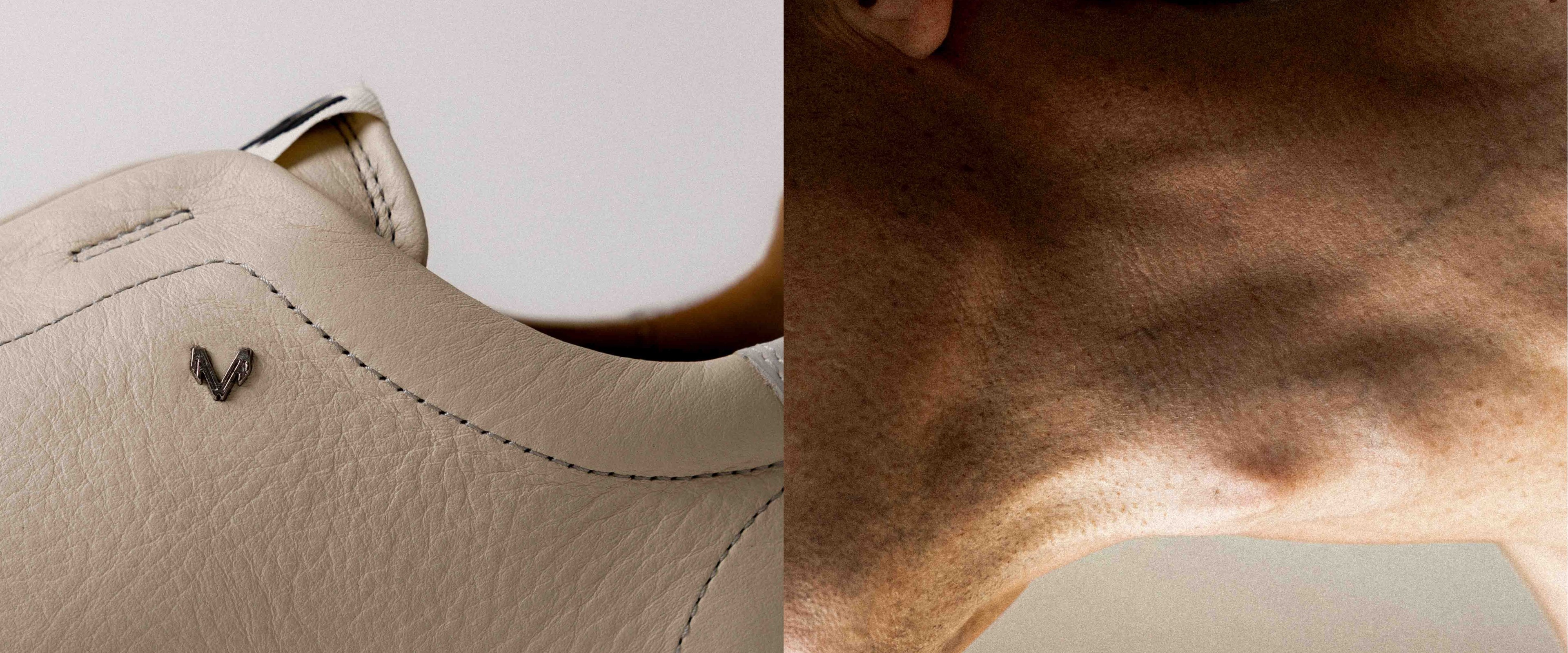
AI-generated imagery from Martinelli’s Valentine’s campaign. Production: PHOCUS Creators. Director: Nora Solaz. View the project and credits.
Choose live action when the captured performance matters
Filming can be the appropriate starting point when the idea depends on a particular performer, a real interaction or a specific product demonstration. The team can direct performance and record the physical scene, while still making deliberate choices about lighting, styling and post-production.
Plan the parts that need to remain authentic to the brief. If a product action is important, define the angle and evidence the viewer needs. Do not assume every live-action campaign must be produced entirely in camera; effects and retouching can be part of an agreed workflow.
Consider full AI for a deliberately generated visual world
A generated approach can be worth exploring when the creative direction centres on constructed imagery. Test the most difficult asset early: a recognisable product detail, recurring subject, specific movement or controlled composition. A successful mood image does not demonstrate that the complete film and its variations can be delivered.
Include product accuracy, continuity, export quality and revision requirements in the test. Ask what happens if an approved detail must change later. Avoid treating image-generation time as the complete production schedule: art direction, selection, correction and review still need a plan.
Use hybrid production to define what is real and what is generated
A hybrid treatment combines captured and generated elements. One possible approach is to retain a photographed product while exploring generated environments; another may combine filmed performance with constructed visual elements. These are examples of approaches to discuss, not a claim that every combination is suitable.
Draw the boundary clearly in the treatment. Specify which parts must stay fixed, which can be created and how they meet visually. Plan lighting, perspective and motion together. A hybrid proposal needs an integration test as well as a mood reference.
Use five questions to choose a route
First, what must be depicted exactly? Second, does the idea depend on a real person or performance? Third, what continuity is required across shots and stills? Fourth, how predictable must later changes be? Fifth, where will the assets run and what review will they need?
Write the answer for the hardest deliverable, not only the easiest one. For example, a generated still that works for a mood-led campaign may not answer a brief requiring a precise multi-angle demonstration. Test the difficult requirement before committing the whole production to that route.
Compare complete scopes and review requirements
Ask each proposed route to include preparation, testing, execution, post-production, adaptations and approvals. Keep the delivery package consistent so the cost comparison is meaningful. No technique is automatically the cheapest or fastest for every campaign.
Record source assets, tool use and relevant permissions for generated work. Where transparency obligations may apply, review the actual campaign and its deployment context. Our Article 50 production guide links to official sources and explains the distinction between technical marking and audience disclosure.
Discuss the creative choice with PHOCUS
The Martinelli campaign provides a published example of AI imagery produced by PHOCUS. Use it as a visual reference, then define what your own product and audience require. Send the concept, product references and deliverables to discuss a live-action, AI or hybrid production approach.