LED wall automotive video production in Spain: when does it make sense?
An LED wall can be a useful choice for automotive feature films when the car stays in a controlled studio and the background supports a clear demonstration. It is not automatically the right choice for a driving campaign, nor does hiring a screen remove the work of designing the environment. Start with what the viewer needs to see, then decide which shots belong on a stage, on location or in postproduction.
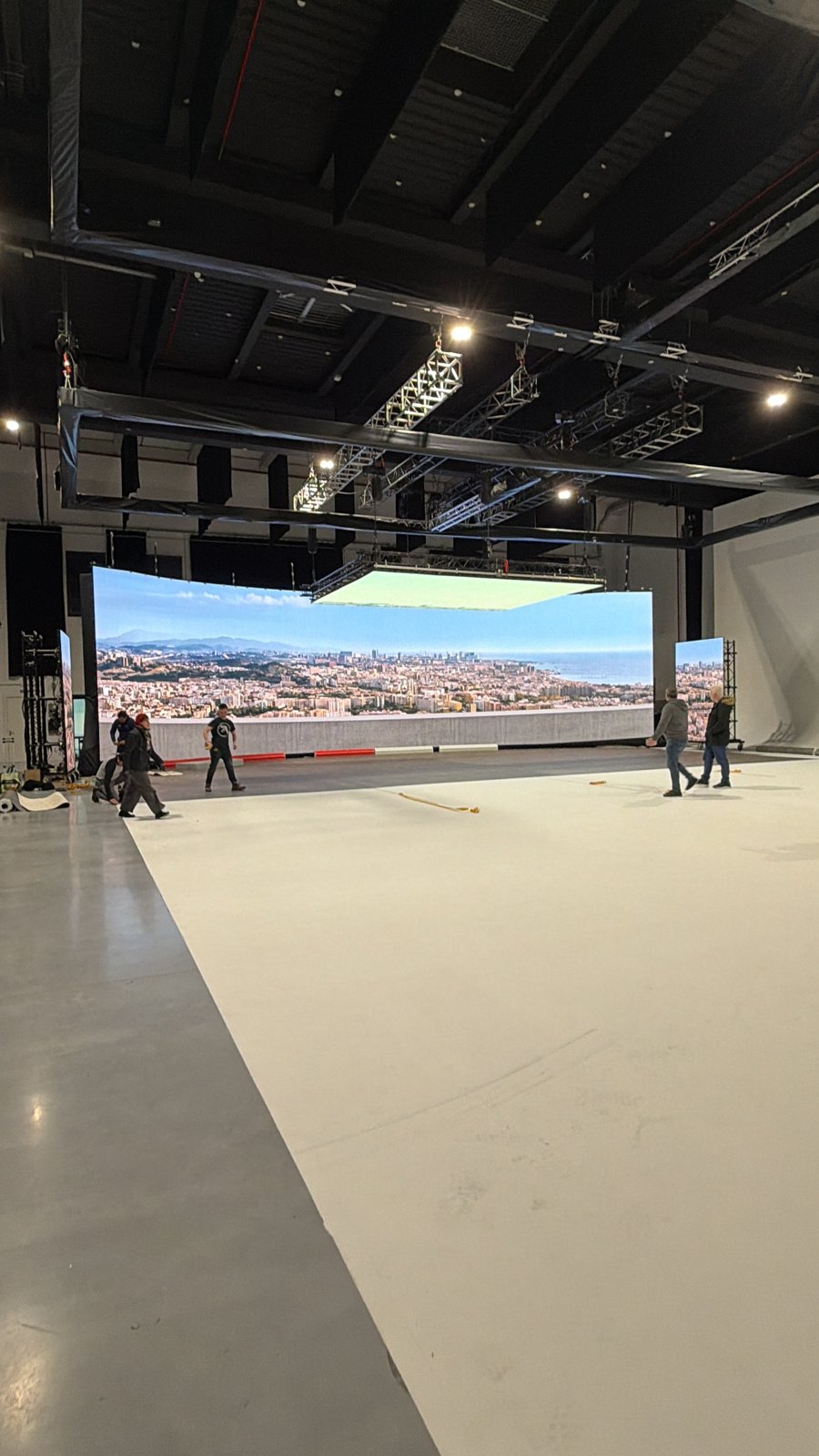
Behind the scenes on the LED stage. These photographs show the physical filming setup; the finished SEAT and CUPRA films are linked below.
Start with the kind of automotive film you are commissioning
A connected-services capsule and a launch commercial ask different questions. A capsule may need a readable interface, a consistent setting and one action the viewer can follow. A commercial may depend on landscape, vehicle movement and changing camera positions. Write down the shots that need a real road or physical interaction before treating an LED stage as the solution for the whole film.
For an agency or international producer planning a shoot, our production service in Spain page explains the route to discussing local production support. Share the intended visual approach and the responsibilities your existing team will retain.
What our SEAT and CUPRA work actually involved
Our SEAT and CUPRA projects combined workshop/aftersales capsules with Connect feature films. The Connect material was filmed with an LED screen and original backgrounds created by PHOCUS. PHOCUS handled direction and client management; production logistics were handled by Glassy Films with participation from PHOCUS.
See the SEAT Workshop & Connect project and the CUPRA Workshop & Connect project for the published work and credits. Those projects demonstrate the combination of customer education and designed backgrounds; they are not a claim that every automotive film should use LED.
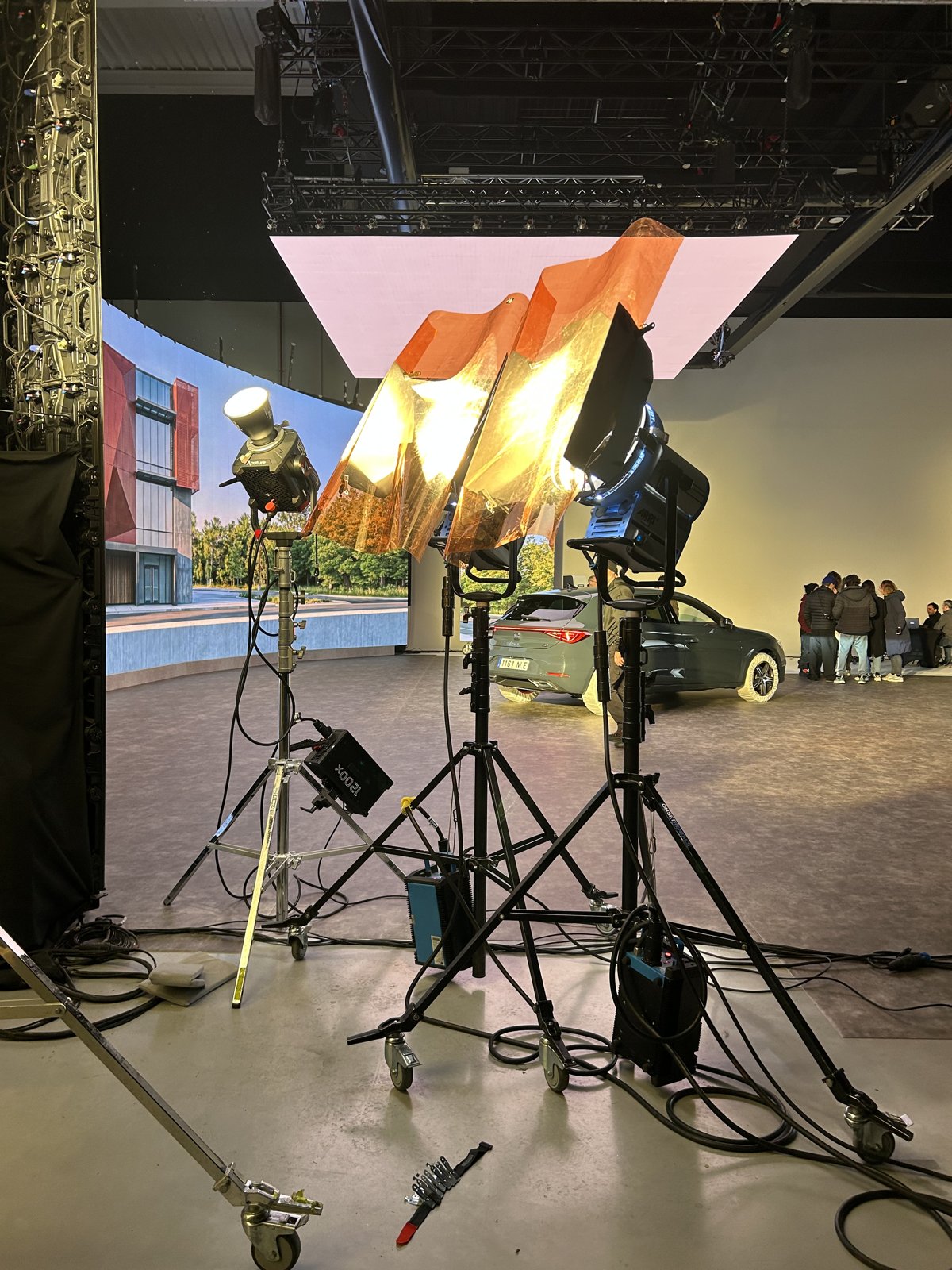
A view of lighting and LED backgrounds during preparation. Screen content, lighting and the vehicle need to be considered together in the production scope.
Choose between a designed background and a tracked environment
Ask whether the background needs to behave like a three-dimensional environment when the camera moves, or whether a prepared image or video background is sufficient for the approved composition. These are different scopes. Specify the camera movement, background movement and visible reflections; ask the production team to explain the proposed method rather than buying an unspecified “virtual production” package.
A screen used behind a stationary vehicle does not by itself mean that a tracked real-time environment is being used. Confirm who creates the background, who prepares it for playback and who approves it through the actual camera.
Approve a camera test before committing to the full shot list
Ask for a test of the proposed vehicle, finish, screen, lens and lighting approach. Review bodywork and glass reflections, the relationship between the car and background, colour, interface legibility and unwanted screen patterns. Inspect the recorded image rather than judging the background only on a laptop.
ARRI’s virtual production FAQ identifies sync, colour and moiré artefacts and recommends testing the actual camera/screen setup. That supports a practical commissioning decision: include testing and background approval in the scope, rather than assuming they happen within the shoot day.
Compare the complete scope, not just stage hire
Ask each proposal to separate background creation, revisions, stage and screen provision, playback support, camera and lighting, vehicle preparation, testing, shoot time and finishing. Confirm which changes can be made during filming and which require new background work. A late change to the desired landscape can be a content-development change, not merely a switch on the screen.
Use our practical shoot versus VFX decision sheet for shots that may need a different method. Keep location shots, LED shots and postproduction shots explicit in the same coverage plan.
Send a brief that a production partner can assess
Include the vehicle model and variants, approved feature list, reference frames, proposed camera moves, required backgrounds, film lengths, aspect ratios, languages, intended channels, dates and a working budget range. Identify who can approve vehicle accuracy, creative treatment and final delivery.
If you are considering LED backgrounds for automotive videos, send PHOCUS your brief and references. We can discuss the creative and production scope against the shots you need. Background development, local logistics and postproduction responsibilities should be agreed in the proposal before the shoot is booked.